eBPF 容器
背景
容器的安全性依赖
- 命名空间
- cgroups
- Linux 权限控制 Capabilities
eBPF 可以做的
- 安全监控
- 安全控制
业界的容器安全解决方案
开源项目
Falco
- 开发者 / 维护者:由 Sysdig 发起,现由 CNCF(Cloud Native Computing Foundation)托管。
- 核心功能:开源的运行时安全监控工具,专注于检测系统和容器中的异常行为(如未授权文件访问、特权升级、异常网络连接等)。通过实时分析系统调用、进程行为等事件,结合预定义规则(或自定义规则)触发告警。
- eBPF 使用情况:支持 eBPF 作为事件收集的核心方式。早期依赖 Sysdig 内核模块,后期为减少内核兼容性问题,引入 eBPF 探针作为更优方案(无需手动加载内核模块,适配更多内核版本),目前 eBPF 是其推荐的事件源。
Tracee
- 开发者 / 维护者:由 Aqua Security 开发并开源。
- 核心功能:基于 eBPF 的系统行为追踪与威胁检测工具,专注于捕获进程、容器的细粒度行为(如系统调用、文件操作、网络交互、内核事件等),通过内置规则引擎识别可疑行为(如恶意代码执行、容器逃逸尝试等)。
- eBPF 使用情况:完全基于 eBPF 实现。通过 eBPF 程序附着到内核钩子(如系统调用、kprobes、uprobes 等),直接从内核层收集事件,无需依赖传统内核模块,是其核心技术支柱
AppArmor
- 开发者 / 维护者:起源于 SUSE,现由 Linux 社区维护,是 Linux 内核官方支持的安全模块。
- 核心功能:强制访问控制(MAC)工具,通过配置文件(Profile)定义进程的访问权限(如允许访问的文件、网络端口、系统调用等),限制程序的 “越权行为”,属于预防性安全机制。
- eBPF 使用情况:不使用 eBPF。基于 Linux 内核的 LSM(Linux Security Modules)框架实现,通过内核内置的访问控制钩子生效,与 eBPF 技术无关
| 对比维度 | Falco | Tracee | AppArmor |
|---|---|---|---|
| 核心定位 | 运行时安全监控与异常检测 | 基于 eBPF 的系统行为追踪与威胁检测 | 强制访问控制(预防性安全) |
| 是否使用 eBPF | 是(支持 eBPF 作为事件收集方式,替代传统内核模块) | 是(完全基于 eBPF 实现事件捕获) | 否(基于 LSM 框架) |
| 技术依赖 | 可选择 eBPF 或 Sysdig 内核模块;依赖规则引擎 | 依赖 eBPF 内核支持(需内核版本≥4.15);规则引擎 | 依赖 Linux 内核 LSM 框架(内核≥2.6.36) |
| 核心功能 | 检测违反规则的异常行为(如特权升级、异常文件访问) | 细粒度追踪进程 / 容器行为,检测可疑操作(如恶意系统调用) | 限制进程访问权限(如文件、网络、系统调用) |
| 应用场景 | 容器 / 主机运行时安全监控、入侵检测(IDS) | 容器安全审计、威胁狩猎、行为分析 | 进程权限限制、减少攻击面(如 Web 服务加固) |
| 优势 | 规则生态丰富,支持多数据源,CNCF 背书 | 完全基于 eBPF,轻量、低侵入,适合容器环境 | 配置简单,内核原生支持,性能开销低 |
| 典型用户 | 云原生环境(K8s 集群)、企业安全监控 | 容器平台(Docker、K8s)、安全研究 | 服务器加固、嵌入式系统安全 |
对比
- eBPF 相关性:Falco 和 Tracee 均依赖 eBPF(Tracee 完全基于 eBPF,Falco 可选 eBPF),而 AppArmor 不涉及 eBPF,依赖传统内核 LSM 机制。
- 功能差异:Falco 和 Tracee 偏向 “检测”(发现已发生的异常),AppArmor 偏向 “预防”(限制可能的危险行为)。
- 技术选型:若需轻量、低侵入的容器行为追踪,优先 Tracee;若需成熟的多场景安全监控,选 Falco;若需限制进程权限以减少风险,选 AppArmor。
分析和诊断
- 通过实时监控内核的行为,再根据不断丰富的特征库做检查匹配,就能找到安全问题
- Tracee 项目
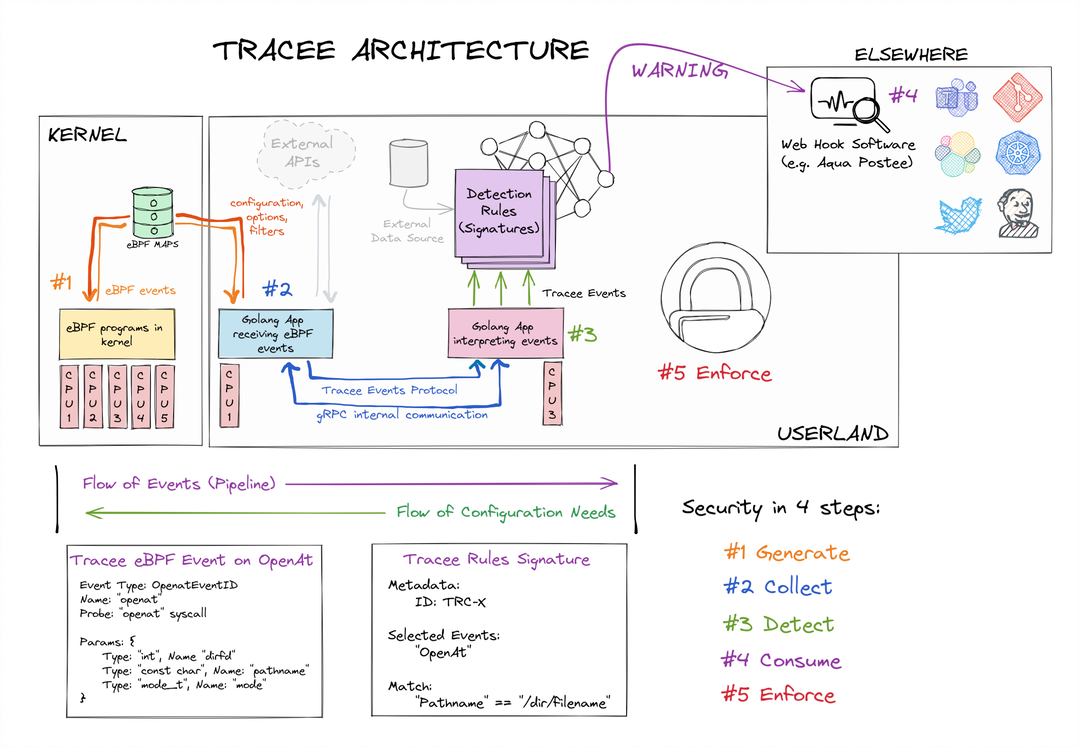
事件监测
- 通过 bpf 来监测各种行为,开销非常低,而且避免了采样的不准确
- Security Monitoring with eBPF
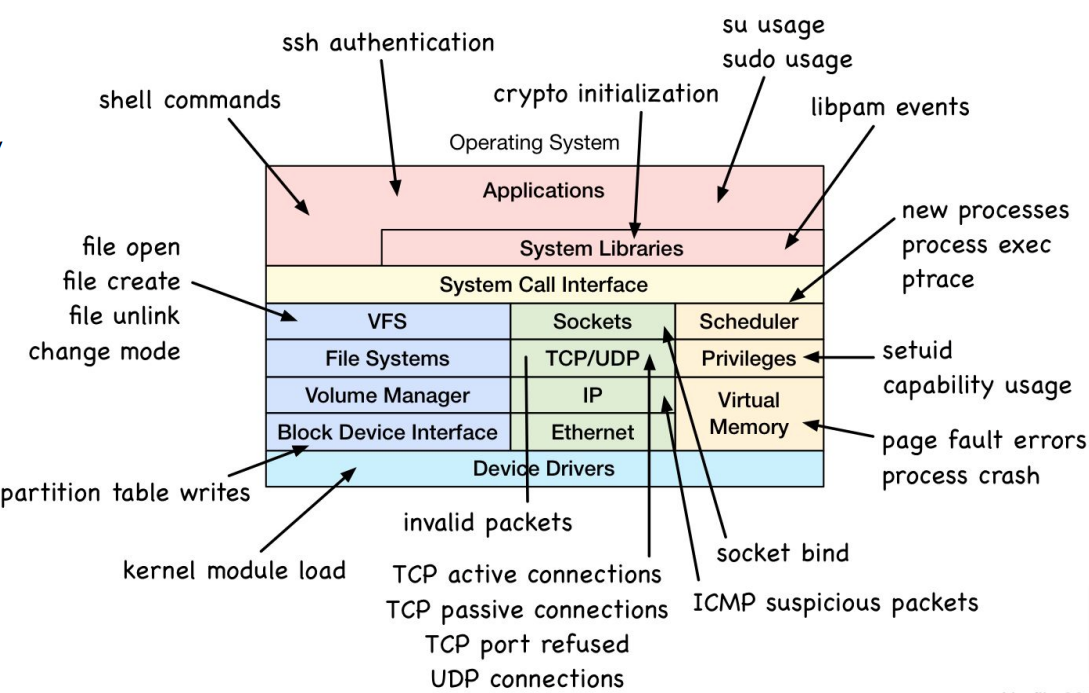
安全策略执行
- 安全计算(seccomp)、Linux 安全模块(LSM)等已有的安全机制,可通过 eBPF 进行安全审计和决策执行
- 可以通过辅助函数 kill 非法进程
- 可以在网络协议栈处理之前,实时监控网络行为,实现丢包处理,效率非常高
- 如下,KubeArmor 限制容器中进程执行、文件访问、网络连接等各种违反安全策略的操作
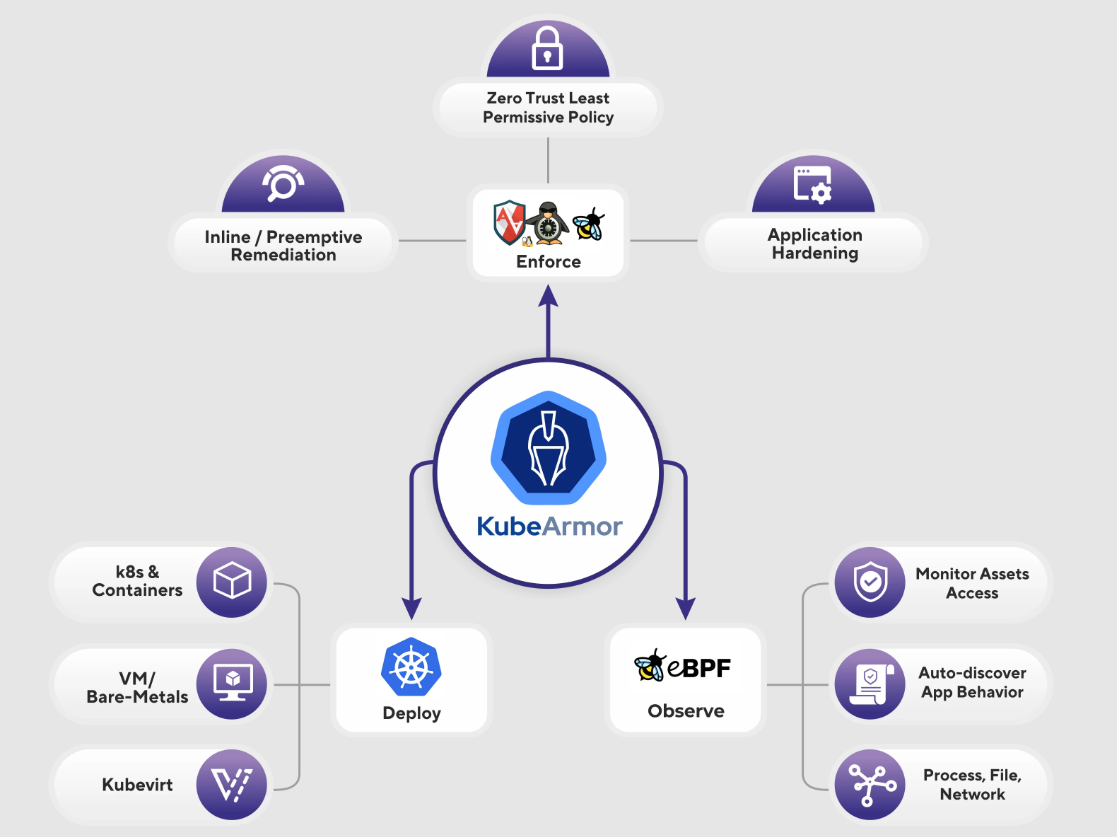
Introduction to LSM:
Linux Security Modules (LSM) is a framework in the Linux kernel that enables mandatory access control (MAC). Unlike discretionary access control (DAC), LSM allows system-wide security policies that enforce rules regardless of user permissions. Key features:
- Hook-based Architecture: Places security hooks at critical kernel operations
- Module-based: Supports multiple security modules (SELinux, AppArmor, Smack)
- Policy Enforcement: Centralized enforcement of security rules
- System-wide Protection: Protects against privilege escalation and resource abuse
LSM inserts security checks at over 200 critical points including:
- File operations (open, execve)
- Network operations (socket, bind)
- Process control (fork, kill)
- Module loading (init_module)
graph TD
    A[System Call] --> B[Kernel Operation]
    B --> C[LSM Hook]
    C --> D{Policy Check}
    D -->|Allowed| E[Operation Proceeds]
    D -->|Denied| F[Permission Error]
LSM vs eBPF Security
graph LR
    LSM[Traditional LSM] -->|Built-in| K[Kernel]
    eBPF[eBPF Security] -->|Dynamic| H[Hooks]

    K --> A[Static Policies]
    H --> B[Dynamic Programs]

    style LSM stroke:#f90
    style eBPF stroke:#09f
Why eBPF Excels in Security
1. Kernel-Level Visibility
- eBPF programs run directly in the Linux kernel, enabling deep inspection of system calls, network packets, file operations, and process behavior without requiring kernel modifications.
- This provides unprecedented visibility into low-level activities, including container escapes, privilege escalations, and malicious payload execution.
- Minimal Performance Overhead
- Unlike traditional security agents that operate in userspace, eBPF reduces context-switching and data-copying overhead.
- For example, eBPF-based network filtering (XDP) processes packets at line-rate speeds (100Gbps+), making it viable for high-traffic environments.
- Dynamic Programmability
- Security policies can be hot-reloaded into production systems.
- This allows real-time responses to threats, such as blocking malicious IPs or patching zero-day vulnerabilities by intercepting vulnerable system calls.
- Context-Aware Enforcement
- eBPF correlates kernel events with user/container identities.
- For instance:
- Link network traffic to specific Kubernetes pods.
- Associate file access with containerized processes.
- This context is critical for auditing and blocking attacks in microservices environments.
- Bypass Kernel Bypass Attacks
- Malware that evades userspace monitoring (e.g., rootkits) can be detected via eBPF’s kernel hooks,
- as it operates beneath traditional security layers.
实验
参考
监控主机、容器内执行的命令:
|
|
在 宿主机、容器中 分别执行 curl
- 095c4b4fcc2e,就是容器的 hostname
- test-VMware-Virtual-Platform,主机的 hostname
|
|
跟踪用户态
- 容器文件系统在不同的 mount 命令空间中
- 对于每个进程来说,Linux 都在 /proc/[pid]/root 处创建了一个链接
- proc 文档
在容器内执行
|
|
之后 写一个脚本,模拟kill 行为,杀掉容器中执行的命令:
|
|
执行
|
|
参考
- bpf 官方文档
- BPF 内核文档
- bcc Reference Guide
- ebpf
- bcc tools
- bpftrace文档
- Application binary interface
- A Manual for the Plan 9 assembler
- About Mermaid
- 整理Markdown 公式编辑常用数学符号
- 《深入高可用系统原理与设计》
- github sockops
- libbpf-bootstrap
- alpine linux
- Linux Networking and Network Devices APIs
- Linux Kernel HTML Documentation
- Operating Systems 2
- linux内核源码
- Bringing TSO/GRO and Jumbo frames to XDP
- Multiple XDP programs per interface: Status and outstanding issues
- 在Ubuntu 24.04上搭建eBPF/XDP开发环境
- Linux 进程管理
- Head First eBPF
- 深入浅出 eBPF 安全项目 Tracee
- 深入探索Linux的lsns命令