心血管系统
心血管系统
心血管系统
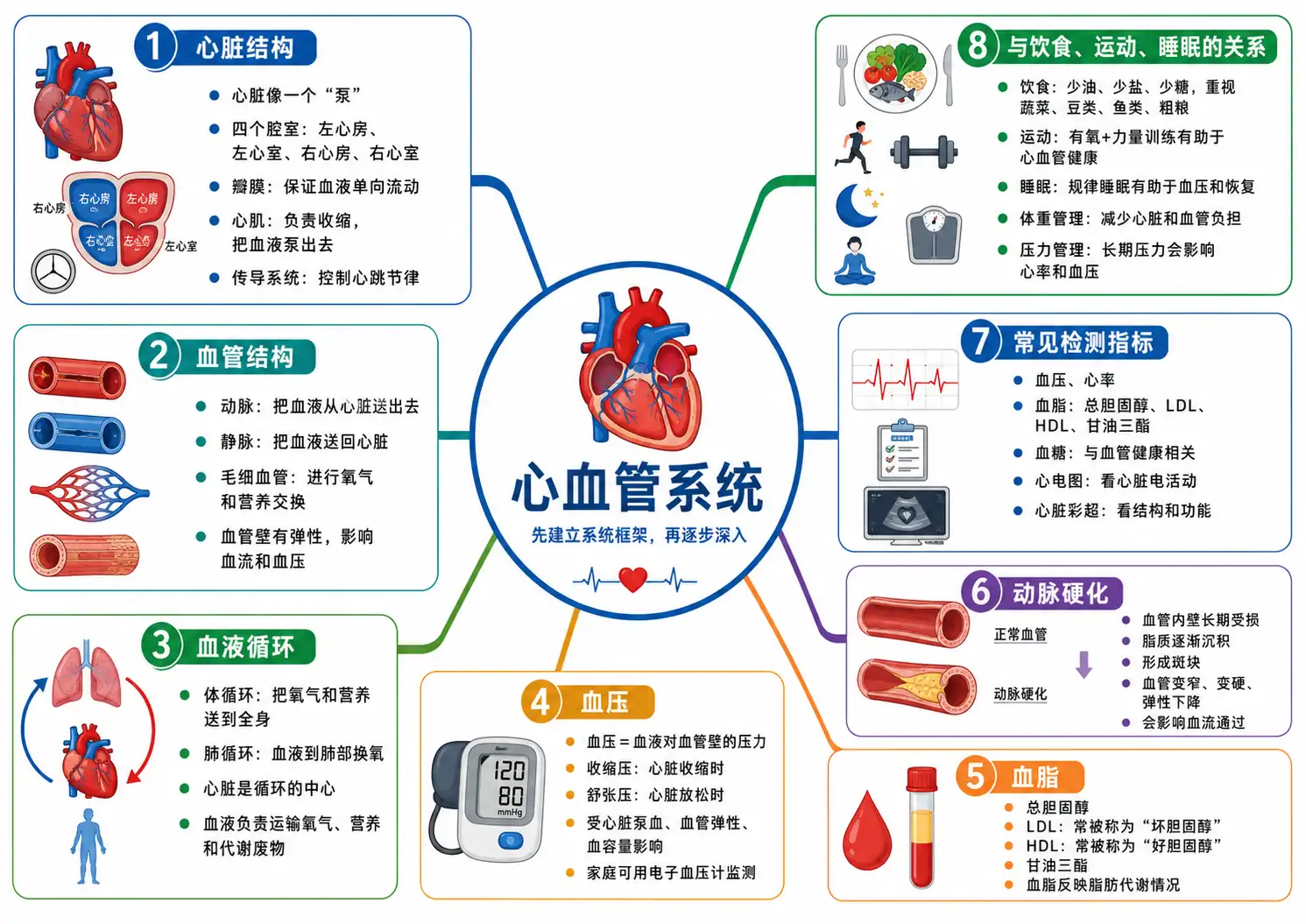
- 心脏是血液循环的动力器官,动脉把血从心脏送出,静脉把血送回心脏
- 组织从血液中摄取氧和营养,血液带回二氧化碳和代谢产
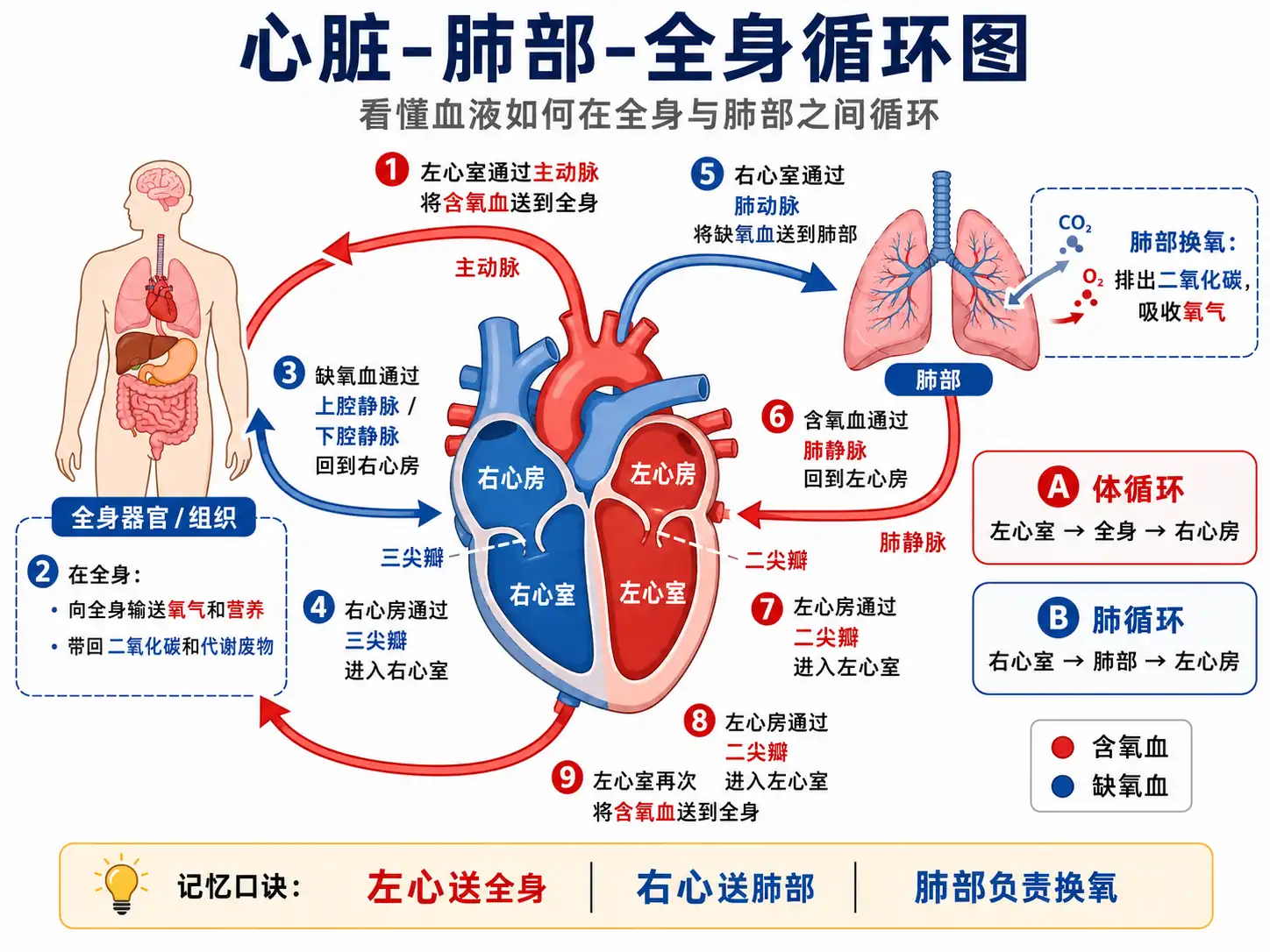
- 全身静脉血先回到右心,再去肺部换气,之后经肺静脉回到左心
心脏
介绍
供血起点
- 通过电信号刺激,从左心室将血液泵到全身大动脉
- 大动脉再流向毛细血管,氧气进入细胞,排泄物流回血液
- 通过静脉将血液流回到右心房,再到右心室,心房类似于缓冲装置,用来暂时容纳回流的血液
- 右心房通过 三尖瓣 将血液输送到右心室
- 右心室将缺氧血送到肺部(这里是经过了动脉流到肺部的)
- 肺部通过氧气交互,把血液中的二氧化碳排除,将氧气注入血液中
- 通过静脉将含氧血送到左心房
- 左心房通过 二尖瓣,将血液送到左心室,于是又一轮新的循环就开始了
- 二尖瓣,三尖瓣是单向控制的,防止血液倒流
- 左心室压力最大 -> 动脉 -> 静脉 -> 右心房压力最小,所以血液就会回流到这里
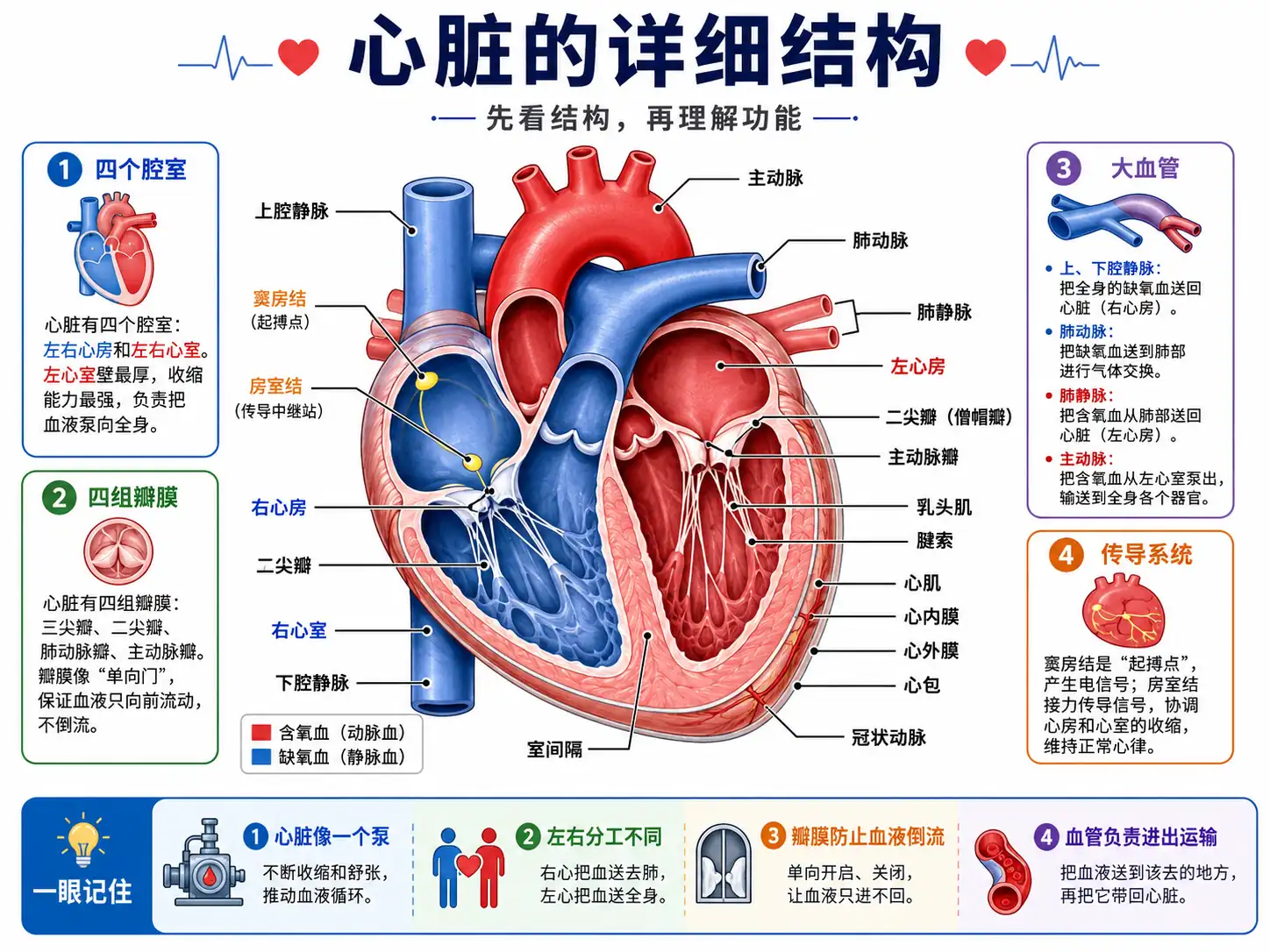
关于二尖瓣,三尖瓣
- 正常心脏的右房室瓣是三尖瓣,左房室瓣是二尖瓣(也叫僧帽瓣)
- 它们的主要作用是保证血液单向流动,防止心室收缩时血液倒流回心房
- 个别先天性瓣膜畸形可以出现瓣叶数量异常,但不属于正常解剖结构
冠状动脉
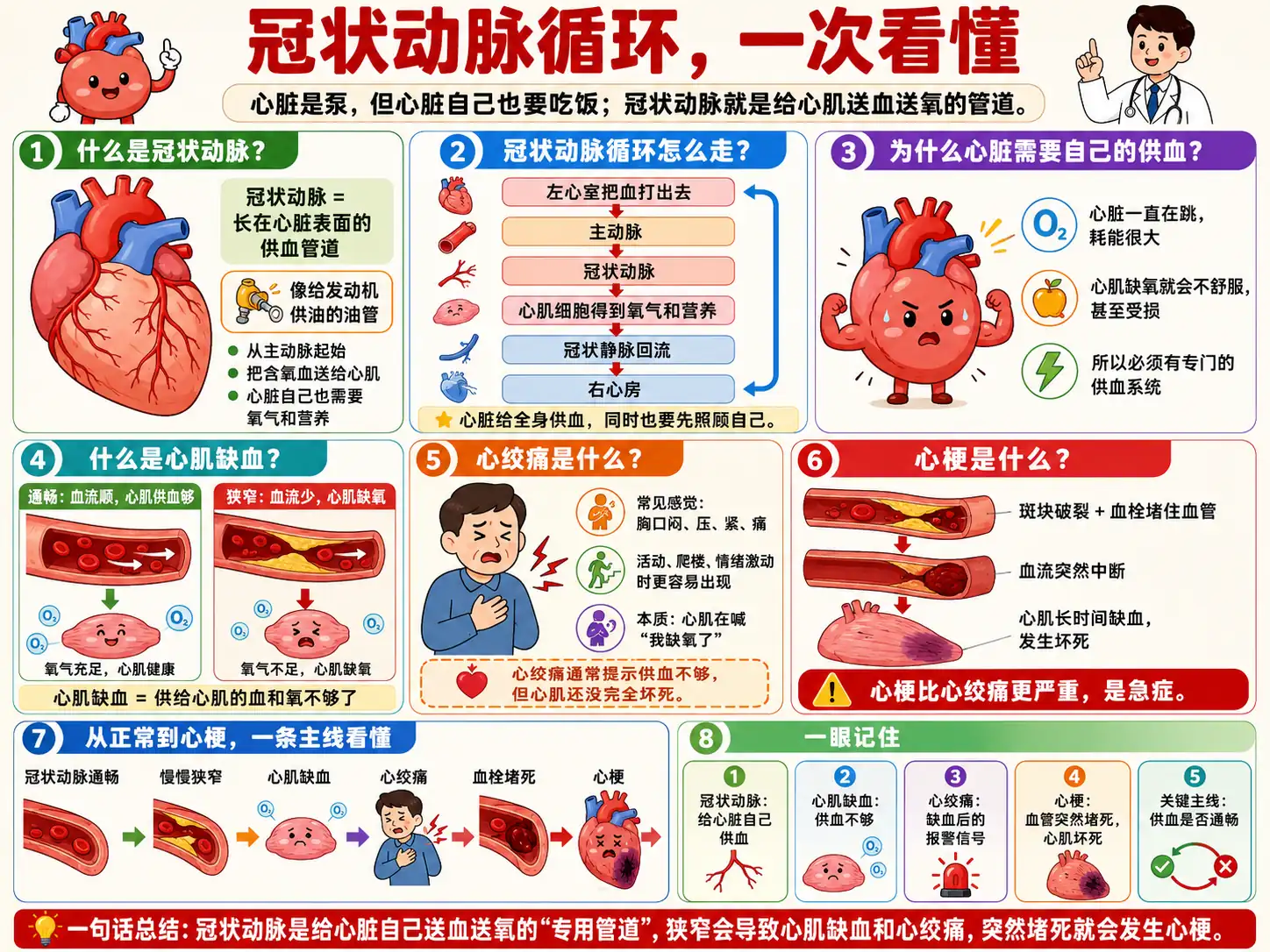
- 给心脏自身输送氧气的血管
- 左心室将血液送入动脉,流入冠状动脉,输送完氧气和营养后,通过冠状静脉流回右心房
心脏的结构与工作机制
心脏的基本结构
- 心脏分为右心房、右心室、左心房、左心室四个心腔,右心主要把缺氧血送往肺部,左心主要把含氧血泵向全身
- 左右两侧之间有中隔分开,避免含氧血和缺氧血直接混合
- 心脏壁可分为心内膜、心肌层和心包等部分,其中真正负责收缩和泵血的是心肌
心脏瓣膜与单向血流
- 心脏的四个主要瓣膜包括三尖瓣、二尖瓣(僧帽瓣)、肺动脉瓣和主动脉瓣
- 瓣膜的作用是保证血液按固定方向流动,防止血液反流
- 如果想进一步理解,可以顺带了解腱索和乳头肌,它们有助于维持房室瓣稳定关闭
心脏的电传导系统
- 心脏能有节律地跳动,依赖自身的电传导系统
- 窦房结通常发出最初的电信号,使心房先收缩
- 电信号随后传到房室结,再下传到心室传导系统,因此心室通常后收缩
心动周期与泵血功能
- 一个完整的心跳称为心动周期,主要分为收缩期和舒张期
- 收缩期时,心室把血液泵出;舒张期时,心腔重新充盈血液
- 临床上常用每搏量、心输出量和射血分数来描述心脏的泵血能力,其中射血分数常用于评估左心室功能
冠状循环与心肌供血
- 心肌本身也需要持续获得氧和营养,这部分供血主要由冠状动脉完成
- 当冠状动脉供血不足时,心肌可能出现缺血,严重时可导致心肌梗死
- 左心室的冠脉灌注主要发生在舒张期,这是理解冠心病和心肌缺血时一个很重要的基础点
相关英文术语
| English Term | Latin | 中文 | English Explanation |
|---|---|---|---|
| atrium | atrium cordis | 心房 | The upper chamber of the heart that receives blood returning to the heart. |
| ventricle | ventriculus cordis | 心室 | The lower chamber of the heart that pumps blood out of the heart. |
| right atrium | atrium dextrum | 右心房 | The chamber that receives deoxygenated blood from the body. |
| left atrium | atrium sinistrum | 左心房 | The chamber that receives oxygenated blood from the lungs. |
| right ventricle | ventriculus dexter | 右心室 | The chamber that pumps deoxygenated blood to the lungs. |
| left ventricle | ventriculus sinister | 左心室 | The chamber that pumps oxygenated blood to the body. |
| septum | septum cordis | 心脏中隔 | The wall that separates the right and left sides of the heart. |
| endocardium | endocardium | 心内膜 | The thin inner lining of the heart chambers and valves. |
| myocardium | myocardium | 心肌层 | The muscular layer of the heart responsible for contraction. |
| pericardium | pericardium | 心包 | The sac that surrounds and protects the heart. |
| tricuspid valve | valva tricuspidalis | 三尖瓣 | The valve between the right atrium and right ventricle. |
| mitral valve | valva mitralis | 二尖瓣(僧帽瓣) | The valve between the left atrium and left ventricle. |
| pulmonary valve | valva trunci pulmonalis | 肺动脉瓣 | The valve that regulates blood flow from the right ventricle into the pulmonary artery. |
| aortic valve | valva aortae | 主动脉瓣 | The valve that regulates blood flow from the left ventricle into the aorta. |
| sinoatrial node (SA node) | nodus sinuatrialis | 窦房结 | The natural pacemaker of the heart that starts the electrical impulse. |
| atrioventricular node (AV node) | nodus atrioventricularis | 房室结 | The structure that delays and relays the electrical impulse from atria to ventricles. |
| cardiac conduction system | systema conducens cordis | 心脏传导系统 | The network that generates and conducts electrical signals through the heart. |
| systole | systole | 收缩期 | The phase of the heartbeat when the ventricles contract and pump blood out. |
| diastole | diastole | 舒张期 | The phase of the heartbeat when the heart relaxes and fills with blood. |
| cardiac cycle | - | 心动周期 | One complete heartbeat, including contraction and relaxation. |
| cardiac output | - | 心输出量 | The total amount of blood pumped by the heart in one minute. |
血液、血管
介绍
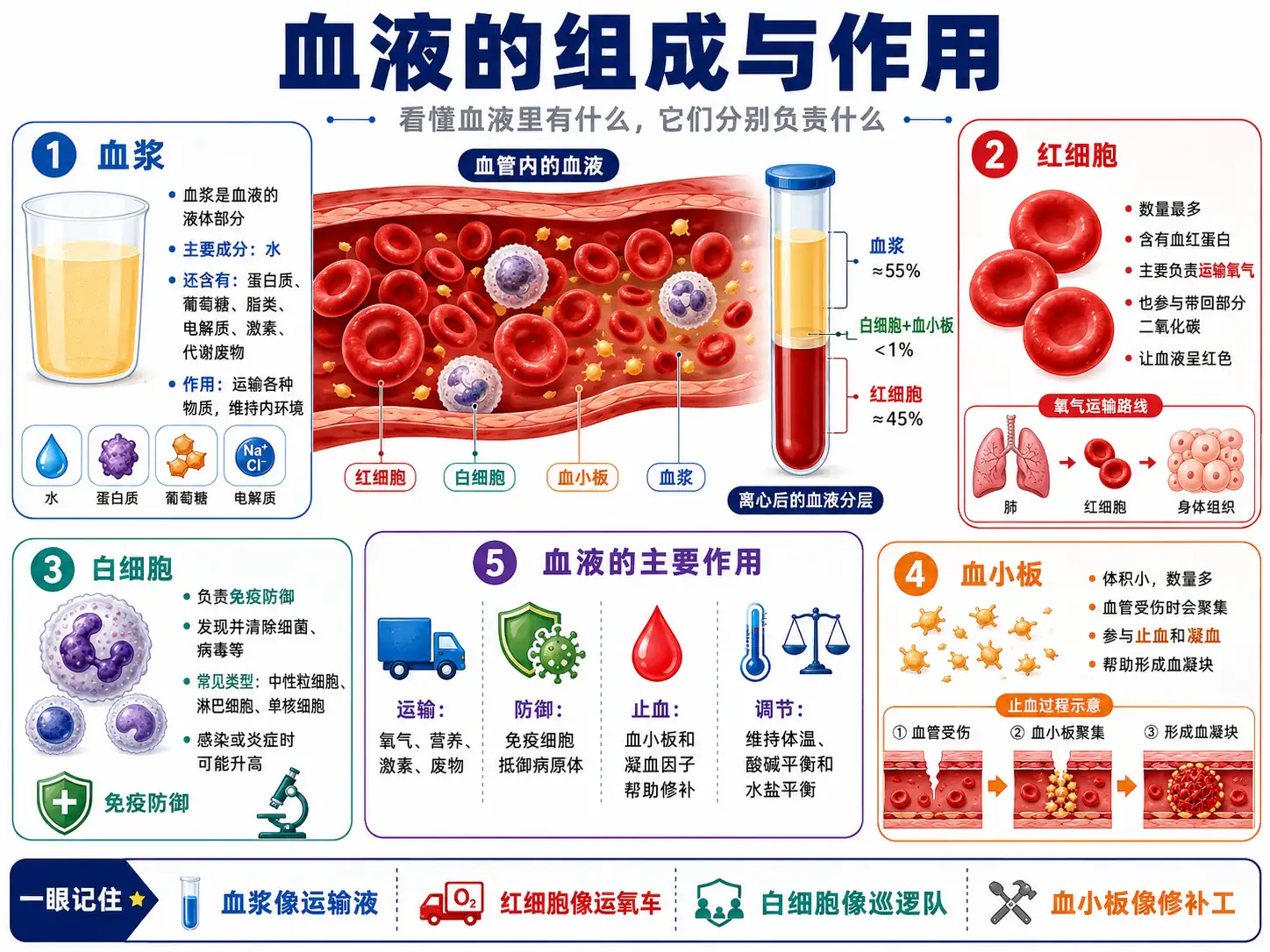
血液中包含
- 约 55% 的血浆(水、蛋白质、葡萄糖、脂类、电解质、激素、代谢废物)
- 约 45% 的红细胞(负责运输氧气,也会带回二氧化碳)
- 小于 1% 的白细胞和血小板(血小板参与止血、凝血;白细胞负责免疫防御)
血管
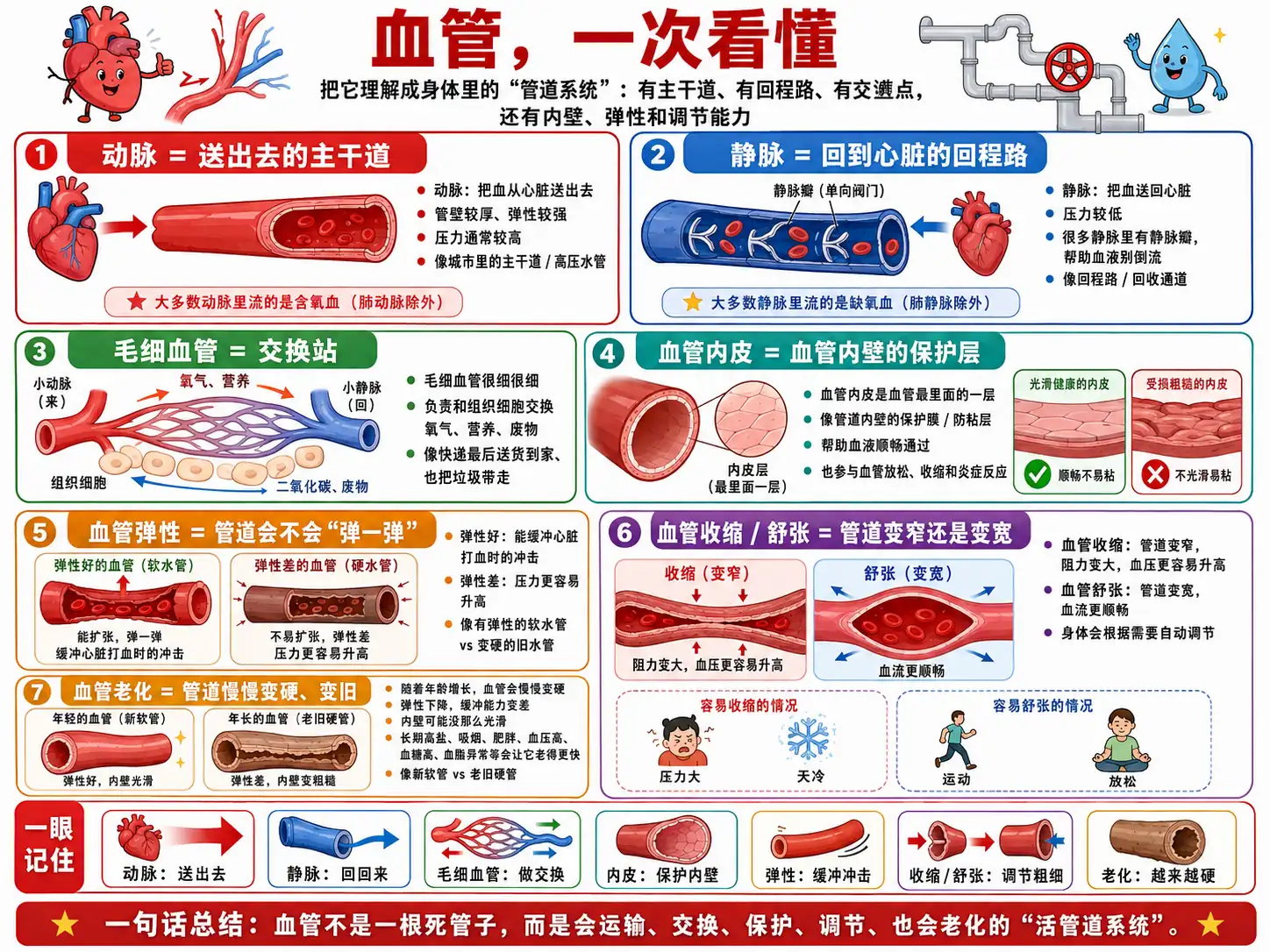
- 本身是有弹性的,血压就是血液打到血管壁上的压力
- 随着年龄增大,血管弹性可能逐渐下降;规律运动有助于心血管健康,并改善部分相关风险因素
- 动脉:从心脏流出的血管
- 静脉:流向心脏的血管
- 毛细血管:血液和细胞进行交互的地方,包含:氧气、营养、废物
- 类比房屋中的水管,常年累月使用,水管本身会老化(水管本身会出现鼓包),水管内会出现废物,阻碍水(血液)流通
血型
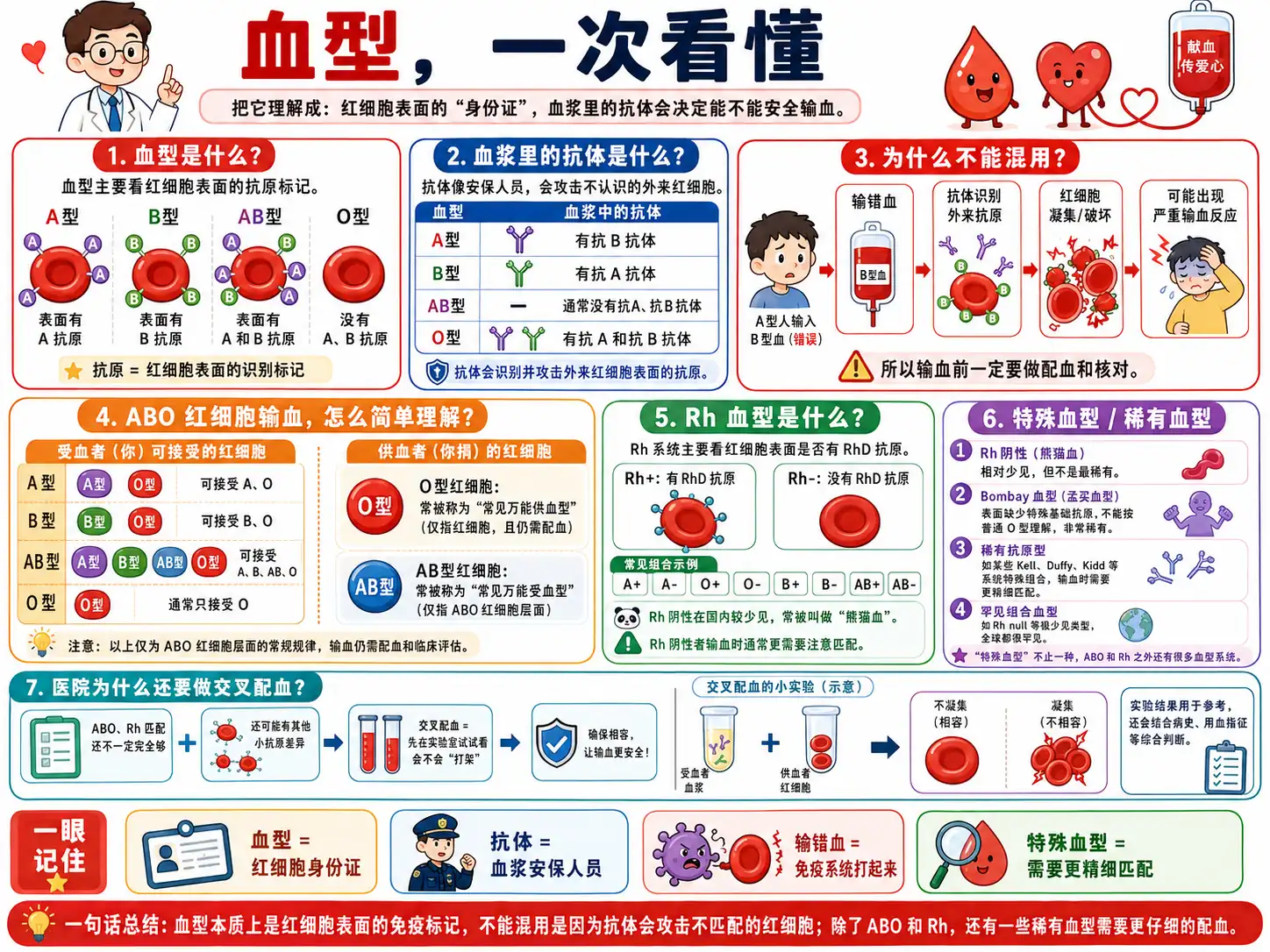
- ABO 血型系统包括 A、B、AB、O 四种类型
- Rh 血型系统常用来区分 Rh 阳性和 Rh 阴性(与红细胞表面是否存在 Rh 抗原有关)
血液与血管的组成和工作机制
血液的基本组成
- 血液主要由血浆、红细胞、白细胞和血小板组成
- 血浆负责运输水、电解质、蛋白质、激素、营养物质和代谢废物
- 红细胞主要负责运输氧气,白细胞主要参与免疫防御,血小板主要参与止血和凝血
血液如何完成运输任务
- 血液把氧气和营养送到组织细胞,同时带走二氧化碳和代谢废物
- 血浆不仅是液体部分,也承担物质运输和维持体液平衡的重要作用
- 红细胞中的血红蛋白是帮助运输氧气的重要成分
血管的基本分类
- 血管主要分为动脉、静脉和毛细血管
- 动脉负责把血液从心脏送出,静脉负责把血液送回心脏
- 毛细血管管壁很薄,是血液和组织之间进行氧气、营养和废物交换的主要场所
血管壁与血流特点
- 动脉壁通常较厚、更有弹性,用来承受较高压力
- 静脉压力相对较低,部分静脉内有静脉瓣,帮助血液回流,减少倒流
- 血压本质上是血液对血管壁产生的压力,血管弹性会影响血流和压力变化
止血、凝血与血栓
- 当血管受损时,血小板会先聚集形成初步堵塞
- 随后凝血相关成分参与,帮助形成更稳定的血凝块
- 正常情况下这是保护机制,但如果在不该形成血栓的地方形成血栓,就可能阻碍血流
相关英文术语
| English Term | Latin | 中文 | English Explanation |
|---|---|---|---|
| blood | sanguis | 血液 | A specialized body fluid that transports oxygen, nutrients, hormones, and waste products throughout the body. |
| plasma | plasma | 血浆 | The liquid part of blood that carries water, proteins, electrolytes, hormones, nutrients, and waste products. |
| red blood cell (RBC) / erythrocyte | erythrocytus | 红细胞 | A blood cell that carries oxygen mainly through hemoglobin. |
| white blood cell (WBC) / leukocyte | leukocytus | 白细胞 | A blood cell involved in immune defense against infection and other threats. |
| platelet / thrombocyte | thrombocytus | 血小板 | A small blood component that helps form the initial plug when a blood vessel is injured. |
| hemoglobin | haemoglobinum | 血红蛋白 | A protein in red blood cells that binds and transports oxygen. |
| artery | arteria | 动脉 | A blood vessel that carries blood away from the heart. |
| vein | vena | 静脉 | A blood vessel that carries blood back to the heart. |
| capillary | vas capillare | 毛细血管 | A tiny thin-walled vessel where exchange of oxygen, nutrients, and waste occurs between blood and tissues. |
| vasculature | - | 血管系统 | The overall network of blood vessels in the body. |
| blood pressure | - | 血压 | The force of blood pushing against the walls of blood vessels. |
| hemostasis | haemostasis | 止血 | The process that stops bleeding after blood vessel injury. |
| coagulation | coagulatio | 凝血 | The process in which blood forms a more stable clot. |
| thrombus | thrombus | 血栓 | A blood clot formed inside a blood vessel that may partially or completely block blood flow. |
血糖、血脂、血压
介绍
血脂
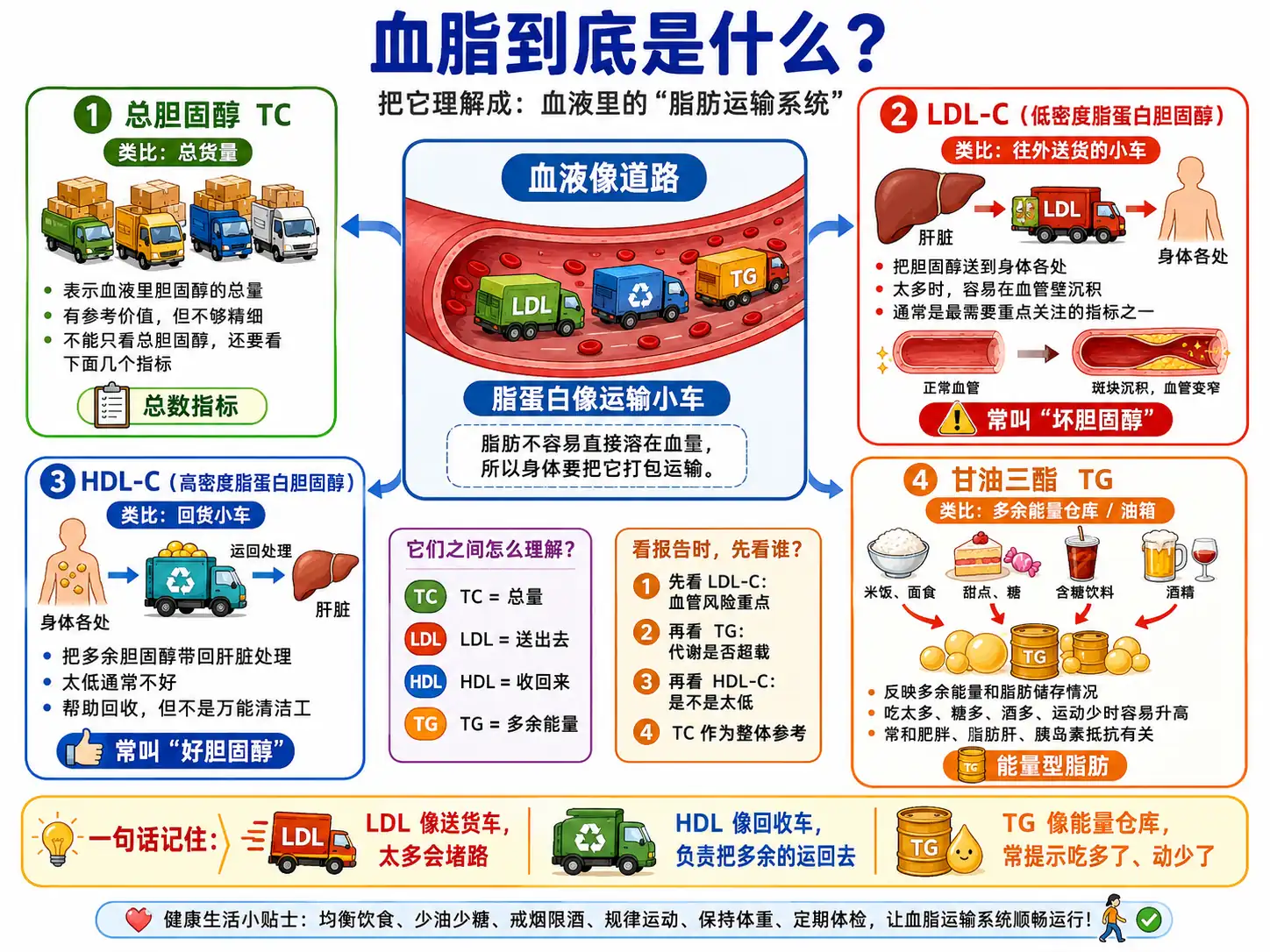
- 包含胆固醇类、甘油三酯
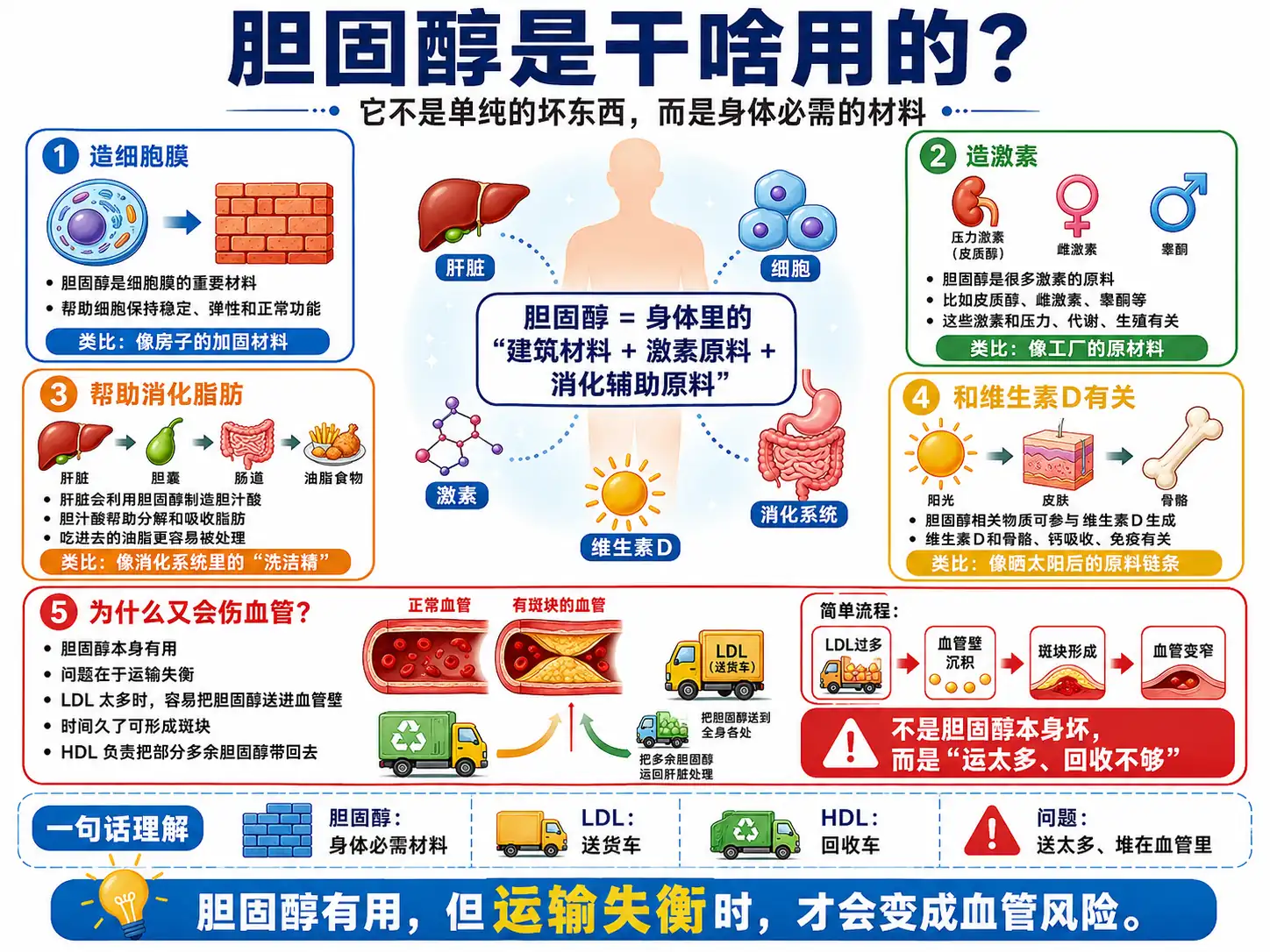
- 脂蛋白本身不溶于水,需要特殊的类似蛋白质小车的装置来运输
- 低密度脂蛋白胆固醇 LDL-C:把胆固醇运输到身体各处
- 高密度脂蛋白胆固醇 HDL-C:把多余的胆固醇送到肝脏处理
- 甘油三酯:多余的能量,会被存储起来
胆固醇
- 身体的建筑材料 + 激素原料 + 消化辅助原料
- 参与细胞建造
- 肝脏利用胆固醇制造胆汁酸,帮助消耗和吸收
- 产生激素:皮质醇、雄性激素、雌性激素、睾酮
- 参与维生素D 生成
血糖
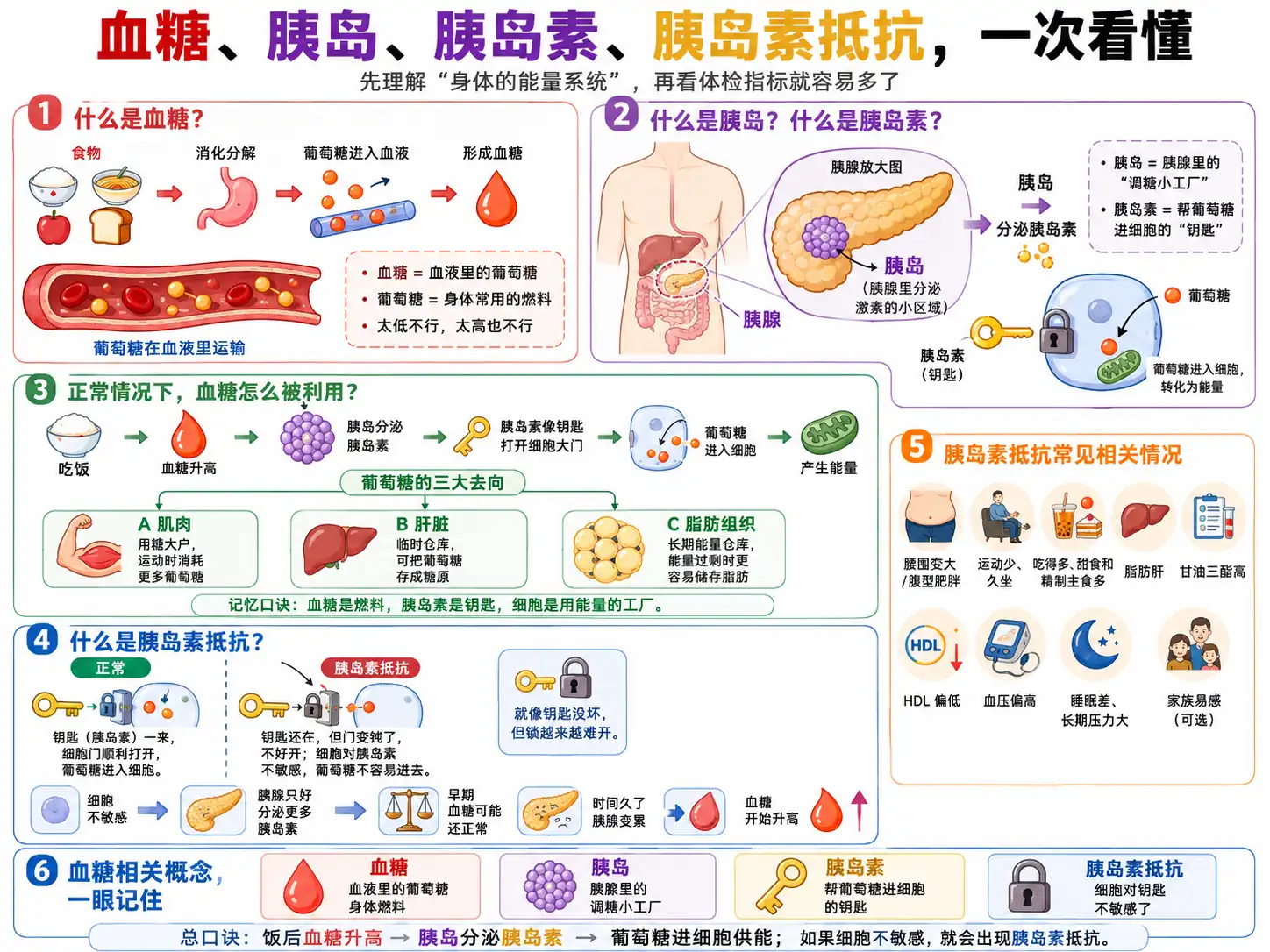
- 食物分解后产生的葡萄糖
- 胰腺会分泌胰岛素,让葡萄糖进入细胞
- 胰岛素抵抗,细胞对胰岛素不敏感了,导致葡萄糖不能正常进入细胞
- 肌肉会消耗葡萄糖;肝脏会临时存储葡萄糖(必要时分解葡萄糖);长期存储在脂肪组织
血压
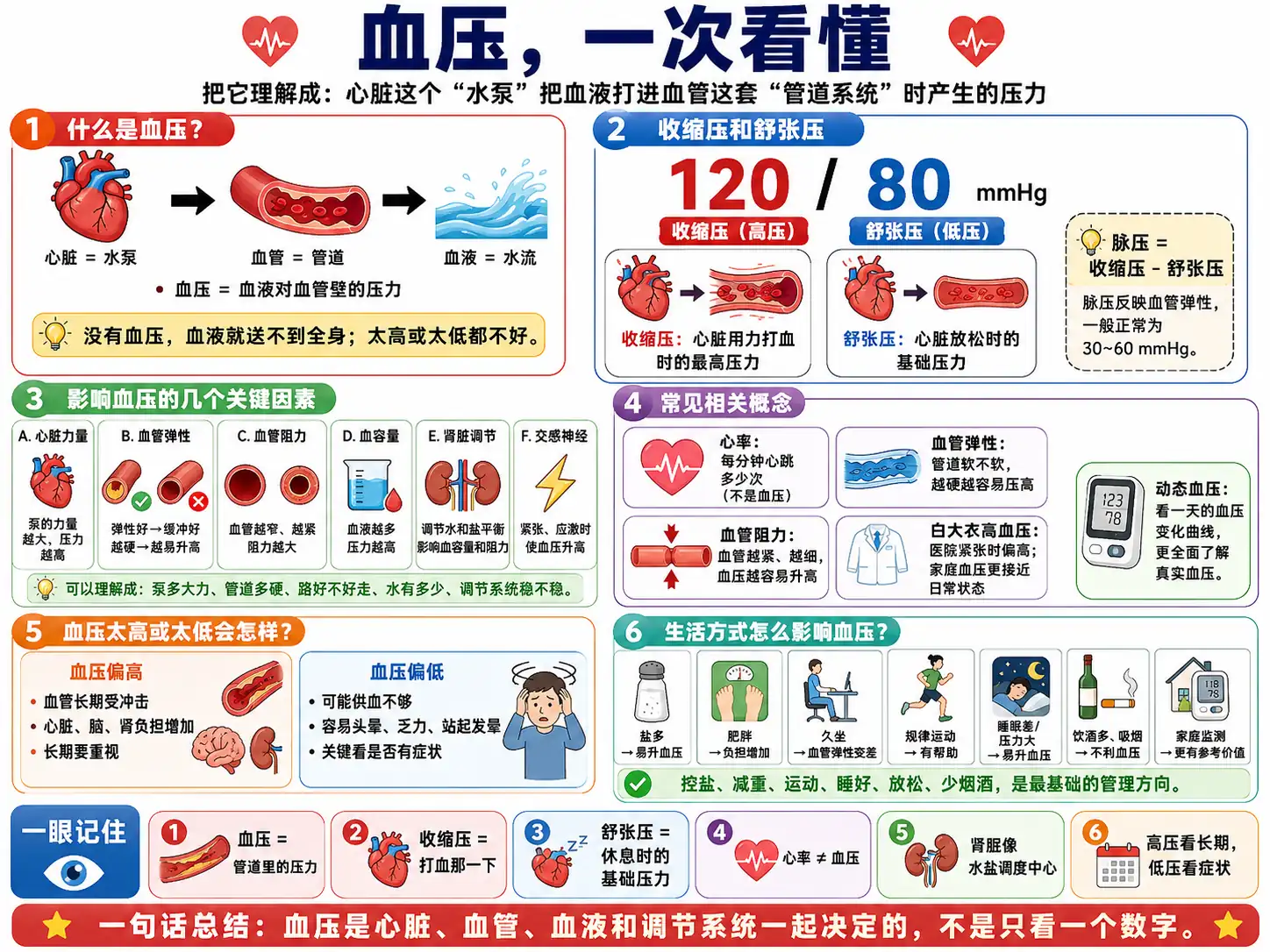
- 血液对血管壁的压力
- 收缩压:心脏用力输出血液时的压力
- 舒张压:心脏放松时的基础压力
血糖、血脂、血压的工作机制
血糖的基本机制
- 血糖主要指血液中的葡萄糖,它是人体重要的能量来源之一
- 进食后,食物中的碳水化合物被分解为葡萄糖进入血液,血糖升高会刺激胰腺分泌胰岛素
- 胰岛素帮助葡萄糖进入细胞被利用或储存;当细胞对胰岛素反应变差时,就会出现胰岛素抵抗
血脂的基本机制
- 血脂主要包括胆固醇和甘油三酯,它们都需要借助脂蛋白在血液中运输
- LDL 胆固醇会把胆固醇运送到身体各处;当 LDL 过高时,更容易参与动脉壁斑块形成
- HDL 胆固醇有助于把多余的胆固醇带回肝脏处理;甘油三酯则更多反映能量储存和代谢状态
血压的基本机制
- 血压是血液流动时对血管壁产生的压力,通常用收缩压和舒张压来描述
- 收缩压反映心室收缩时血液对动脉壁产生的较高压力,舒张压反映心脏舒张时血管内维持的基础压力
- 血压水平会受到心脏泵血能力、血管弹性和外周血管阻力等因素共同影响
代谢异常与心血管风险
- 长期高血糖会损伤血管和神经,并增加心脑血管疾病风险
- LDL 胆固醇升高、HDL 偏低或甘油三酯升高,通常提示动脉粥样硬化风险增加
- 持续高血压会增加心脏、脑、肾脏和血管系统的负担,是常见的心血管危险因素
相关英文术语
| English Term | Latin | 中文 | English Explanation |
|---|---|---|---|
| blood glucose | - | 血糖 | The amount of glucose circulating in the blood, which serves as a major source of energy for the body. |
| glucose | glucosum | 葡萄糖 | A simple sugar that the body uses as an important fuel source. |
| insulin | insulina | 胰岛素 | A hormone made by the pancreas that helps glucose move from the bloodstream into cells. |
| insulin resistance | - | 胰岛素抵抗 | A condition in which the body’s cells do not respond normally to insulin. |
| lipid | - | 脂类 | A broad group of fats and fat-like substances in the body, including cholesterol and triglycerides. |
| cholesterol | cholesterolum | 胆固醇 | A waxy substance used to build cells and make hormones, vitamin D, and bile acids. |
| triglyceride | triglyceridum | 甘油三酯 | A type of fat in the blood that stores unused energy. |
| lipoprotein | lipoproteinum | 脂蛋白 | A particle made of fat and protein that carries lipids through the blood. |
| low-density lipoprotein (LDL) | - | 低密度脂蛋白 | A lipoprotein that carries cholesterol to tissues and is associated with plaque buildup when levels are high. |
| high-density lipoprotein (HDL) | - | 高密度脂蛋白 | A lipoprotein that helps carry excess cholesterol back to the liver. |
| blood pressure | - | 血压 | The force of blood pushing against the walls of blood vessels. |
| systolic blood pressure | - | 收缩压 | The higher blood pressure measured when the heart contracts and pumps blood out. |
| diastolic blood pressure | - | 舒张压 | The lower blood pressure measured when the heart relaxes between beats. |
| hypertension | hypertensio arterialis | 高血压 | A condition in which blood pressure remains higher than normal over time. |
疾病和检测
介绍
动脉粥样硬化
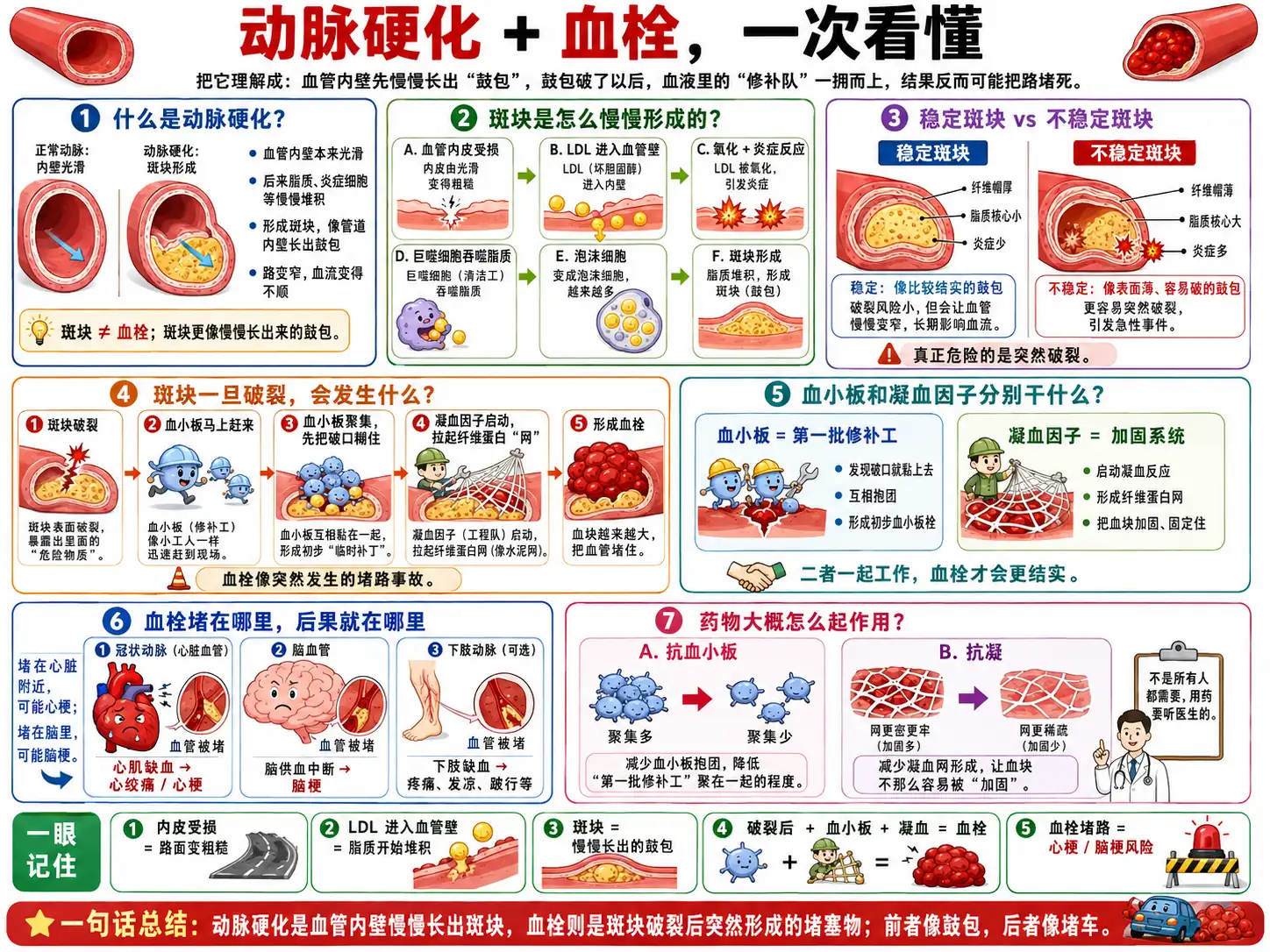
- 动脉粥样硬化是动脉硬化的一种,核心问题是动脉壁内形成脂质斑块
- 斑块:内皮受损后,LDL 胆固醇等成分进入血管壁,被巨噬细胞吞噬后逐渐形成斑块
- 血栓:斑块破裂后,血小板和凝血因子可聚集形成血栓,进一步阻碍血液流动
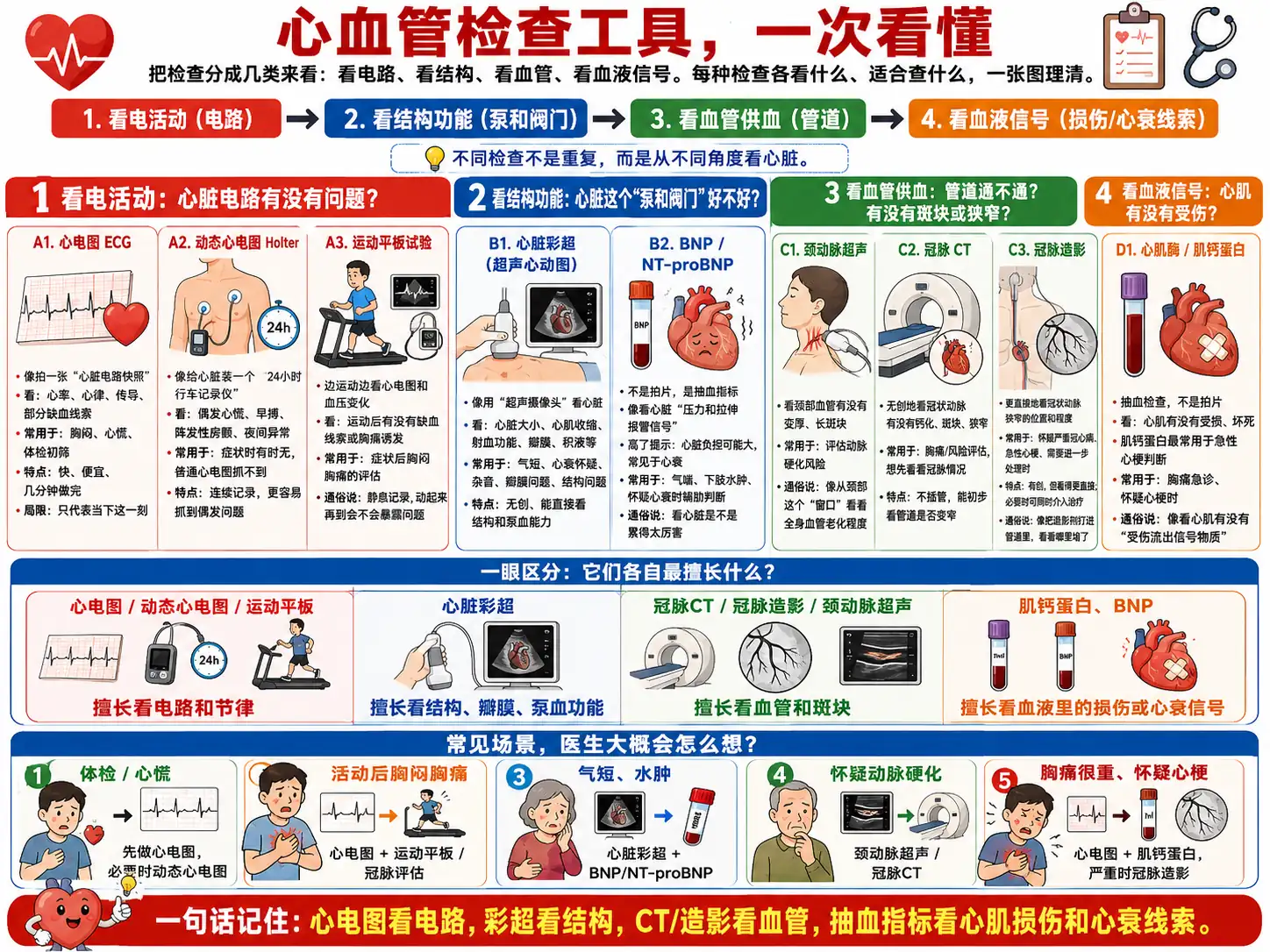
心血管检查工具
- 看心脏电路是否正常:心电图
- 看功能是否正常:心脏彩超
- 看血管供血是否通畅:冠脉CT、颈动脉彩超
- 看是否存在心肌损伤:肌钙蛋白、心肌酶等血液指标
心血管疾病
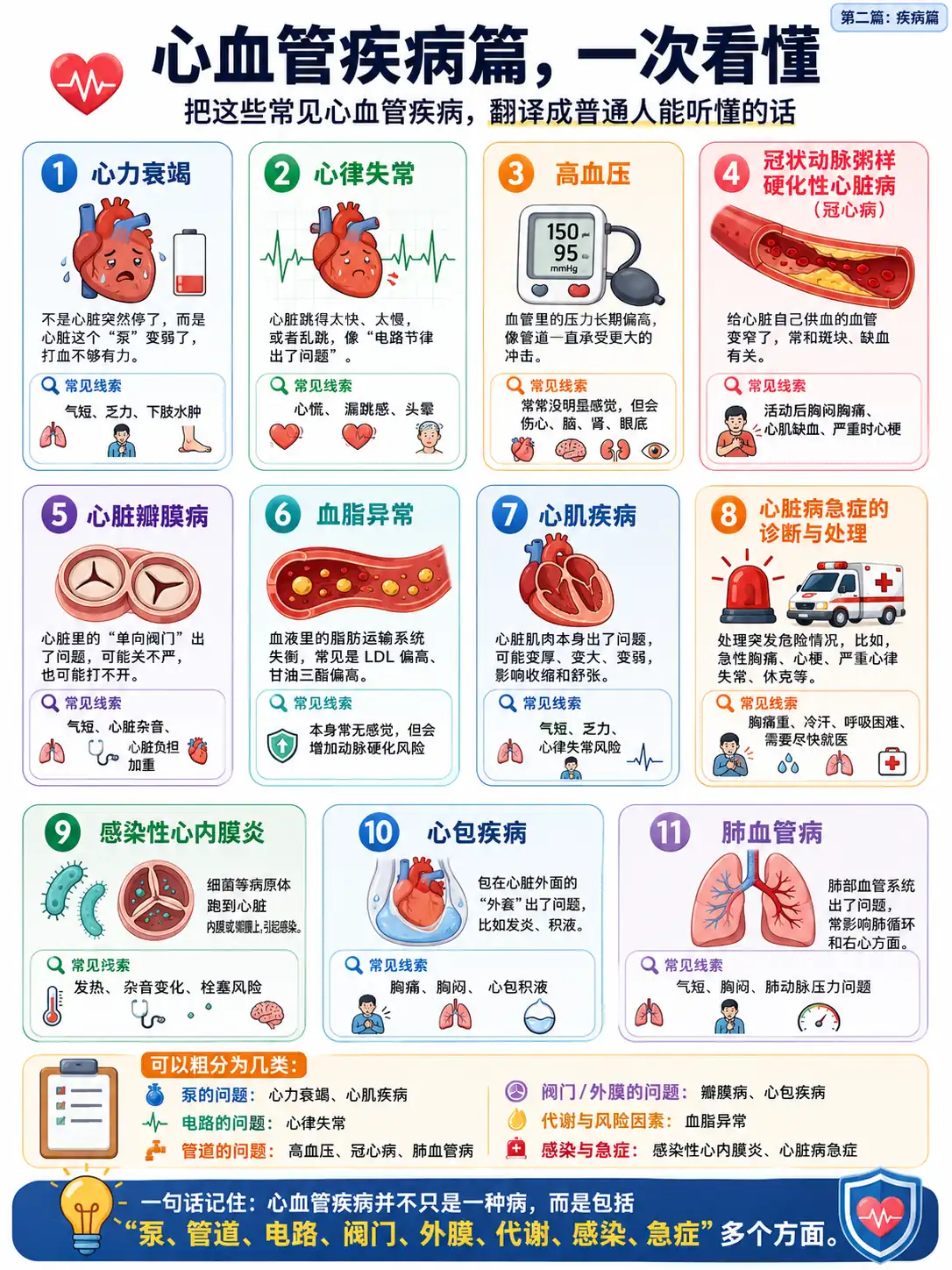
- 泵的问题:心力衰竭、心肌疾病
- 电路问题:心率失常
- 管道问题;高血压、冠心病、肺血管病
- 阀门/外膜:瓣膜病、心包疾病
- 代谢相关:血脂异常
- 感染与急诊:感染性心内膜炎、心血管急症
心血管疾病的常见类型与发病机制
冠状动脉疾病
- 常见基础问题是动脉粥样硬化,斑块使冠状动脉变窄,心肌供血不足时可出现心绞痛
- 如果斑块破裂并形成血栓,可能进一步导致急性心肌梗死
心力衰竭
- 指心脏泵血能力下降,不能满足身体组织对血液和氧气的需要
- 可表现为收缩功能减弱,也可表现为心脏变硬、舒张充盈受限
心律失常
- 指心脏电活动异常,导致心跳过快、过慢或不规则
- 这类问题通常和窦房结、房室结或心室传导系统异常有关
瓣膜病
- 主要包括瓣膜狭窄和瓣膜关闭不全
- 它们会影响血液前向流动,严重时可增加心脏负担
高血压与血管疾病
- 长期高血压会损伤血管,并增加心脏、脑和肾脏等器官的负担
- 外周动脉、颈动脉或主动脉等部位出现病变时,也属于心血管疾病的重要组成部分
常见检查与它们主要看什么
心电图(ECG)
- 主要看心脏电活动是否异常,常用于发现心律失常、缺血线索或既往心肌损伤线索
心脏彩超(echocardiography)
- 主要看心脏结构和功能,如心腔大小、瓣膜情况、心肌运动和射血分数
肌钙蛋白(troponin)
- 主要用于判断是否存在心肌损伤,急性胸痛时尤其重要
冠脉CT或冠脉CT血管成像
- 主要看冠状动脉是否有狭窄、钙化或斑块
运动负荷试验
- 主要看活动时是否出现心肌缺血线索,常用于评估冠心病风险
动态心电图(Holter monitoring)
- 主要看日常生活中是否出现间歇性心律失常
血脂、血糖、血压
- 这些不是直接看心脏结构的检查,但它们是评估心血管危险因素的重要项目
相关英文术语
| English Term | Latin | 中文 | English Explanation |
|---|---|---|---|
| coronary artery disease (CAD) | - | 冠状动脉疾病 | A disease in which the coronary arteries become narrowed or blocked, usually because of atherosclerosis. |
| angina | angina pectoris | 心绞痛 | Chest discomfort caused by reduced blood flow to the heart muscle. |
| myocardial infarction (MI) | infarctus myocardii | 心肌梗死 | Damage to heart muscle caused by a sudden loss of blood supply. |
| heart failure | insufficientia cordis | 心力衰竭 | A condition in which the heart cannot pump enough blood to meet the body’s needs. |
| arrhythmia | arrhythmia | 心律失常 | An abnormal heart rhythm that may be too fast, too slow, or irregular. |
| valvular heart disease | - | 瓣膜性心脏病 | A disorder involving narrowing or leakage of one or more heart valves. |
| stenosis | stenosis | 狭窄 | An abnormal narrowing of a blood vessel or heart valve opening. |
| regurgitation | regurgitatio | 反流 | Backward flow of blood through a heart valve that does not close properly. |
| electrocardiogram (ECG) | electrocardiogramma | 心电图 | A test that records the electrical activity of the heart. |
| echocardiography | echocardiographia | 超声心动图 / 心脏彩超 | An ultrasound-based test used to assess heart structure and function. |
| troponin | troponinum | 肌钙蛋白 | A cardiac biomarker used to detect heart muscle injury. |
| coronary CT angiography (CCTA) | - | 冠脉CT血管成像 | A CT-based imaging test used to evaluate blood flow and narrowing in the coronary arteries. |
| Holter monitoring | - | 动态心电图 | Continuous ECG recording over a longer period to detect intermittent rhythm problems. |
| stress test | - | 运动负荷试验 | A test that evaluates how the heart responds to physical exertion or simulated stress. |
参考
- Blood, Heart and Circulation
- Blood
- Health Topics
- Blood Basics
- NHLBI: Heart Anatomy
- NHLBI: How the Heart Works
- NHLBI: Blood Flow Through the Heart
- NHLBI: Your Heart’s Electrical System
- American Heart Association: Ejection Fraction Heart Failure Measurement
- Merck Manual: Overview of Heart Valve Disorders
- FIPAT: Terminologia Anatomica, 2nd ed.
- NCBI Bookshelf: Anatomy, Thorax, Heart and Pericardial Cavity
- NCBI Bookshelf: Anatomy, Thorax, Heart Papillary Muscles